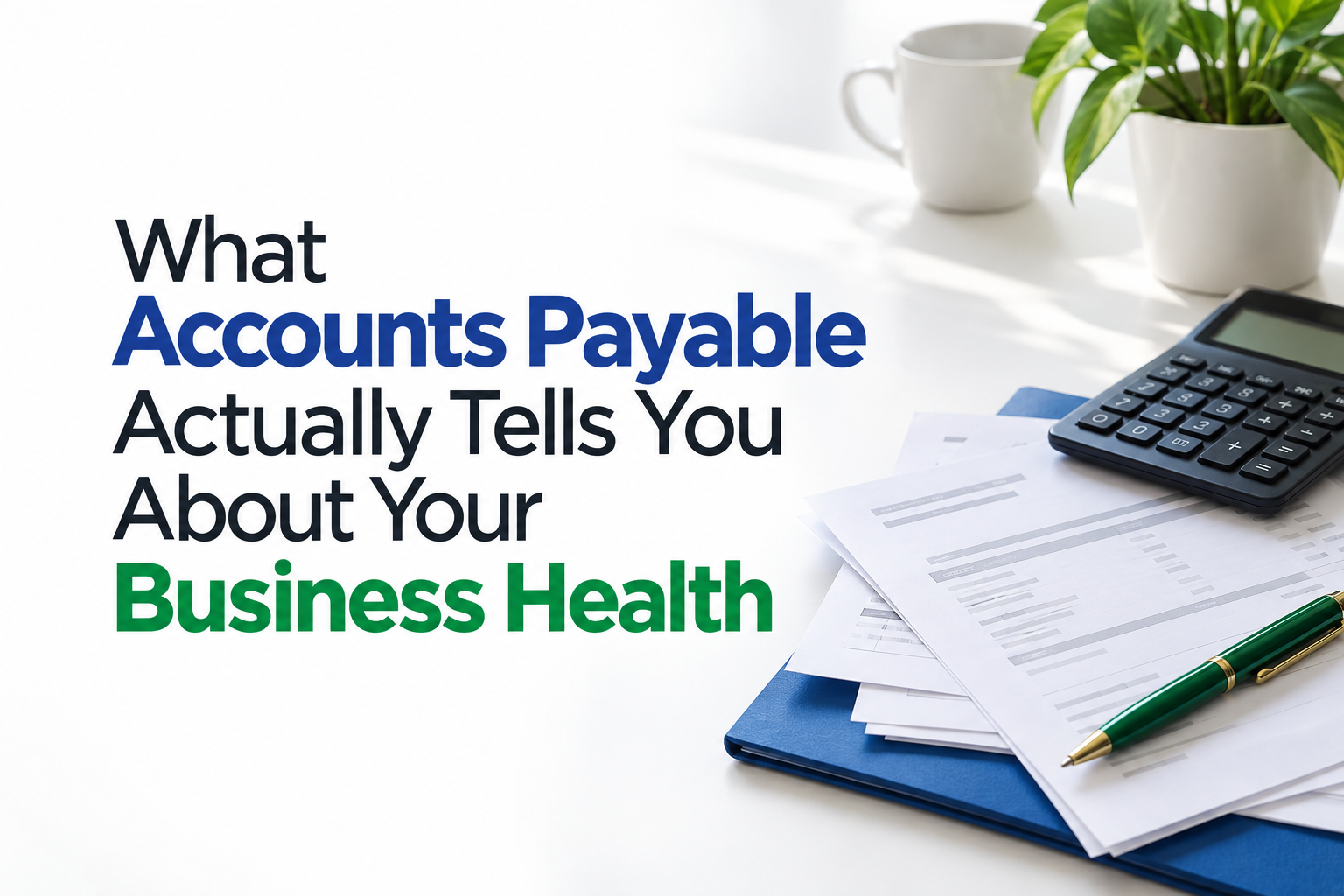
More than just “bills you owe”
Your bank balance looks comfortable. Sales are coming in, and your business seems busy. But how much of that money will you need for bills that haven’t been paid yet?
That’s where accounts payable becomes useful.
Looking at what you owe, when payments are due, and why certain bills remain unpaid can help you make better decisions. The goal is to understand whether upcoming payments fit the cash you expect to have available.
For small business owners, a regular review of accounts payable is a practical place to start.
What Is Accounts Payable?
Accounts payable, often called AP, is money your business owes vendors for goods or services received on credit. On an accrual-basis balance sheet, it generally appears as a current liability.
For example, imagine your business receives $1,200 in supplies with payment due in 30 days. Until you pay the bill, that $1,200 is part of your accounts payable.
AP is different from accounts receivable, which is money customers owe your business.
1. How Much Room You Have for Upcoming Payments
Start by comparing bills coming due with available cash and expected customer payments.
Consider this hypothetical example:
| Cash and upcoming obligations | Amount |
|---|---|
| Current bank balance | $15,000 |
| Vendor bills due this week | −$6,000 |
| Payroll due this week | −$5,000 |
| Remaining before other payments or deposits | $4,000 |
The calculation is simple: $15,000 − $6,000 − $5,000 = $4,000.
Payroll is shown separately because it is generally tracked outside trade accounts payable. The example illustrates why reviewing vendor bills alone isn’t a complete cash forecast.
Before committing to a new purchase, ask: What else must this money cover before the next reliable deposit?
Keep expected customer payments separate from money already received. If a payment arrives late, your vendor deadlines may still stay the same.
2. Whether Unpaid Bills Are Actually Overdue
An unpaid bill isn’t automatically a late bill.
An accounts payable aging report helps separate amounts that are still within their payment terms from amounts already overdue. When aging is based on due dates, “current” means the bill is not yet due. Other columns commonly show bills that are 1–30, 31–60, 61–90, or more than 90 days past due.
Imagine two businesses each owe $12,000.
One owes the full amount next month. The other has $8,000 that is already more than 60 days overdue. The totals match, but the payment situations are very different.
Review overdue balances individually. Ask:
- Is there a cash shortage?
- Is the invoice being disputed?
- Is approval still pending?
- Was the payment recorded correctly?
Use the answers to decide what needs attention first.
3. Whether Your Payment Habits Support Vendor Relationships
Late payments can strain supplier relationships and may lead vendors to require payment on delivery. Paying earlier than necessary can also leave less cash available for other obligations.
A practical approach is to schedule payments around agreed terms and your cash forecast.
If a vendor offers an early-payment discount, check whether taking it would leave enough money for other upcoming needs. If you anticipate difficulty paying, contact the vendor before the due date and discuss options.
Document any revised agreement so the person handling payments knows which schedule to follow.
During your review, pay particular attention to vendors essential to daily operations. Ask what would happen if a delivery or service were interrupted and plan accordingly.
4. Whether Your Bookkeeping Needs Attention
An old balance may reflect a recordkeeping problem.
QuickBooks explains that a paid bill can remain on an open-transactions report when its payment or credit hasn’t been properly applied. Report dates and aging settings can also affect what appears.
Before paying an unfamiliar outstanding balance, compare the bill with payment records and any vendor credits.
Missing bills matter, too. Under accrual accounting, leaving out a repair invoice can understate both expenses and liabilities, making reported profit look higher than it should.
Make a habit of investigating:
- Bills you believe were already paid.
- Unexplained negative vendor balances.
- Missing invoices listed on vendor statements.
- Old balances that no one can explain.
Resolve the underlying issue before treating the report as a payment list.
5. How Your Payment Pattern Is Changing
Your payment trend can provide more context than a single month’s balance.
One measure is average days payable, which estimates how long your business takes to pay suppliers. A purchases-based calculation is:
Average accounts payable ÷ credit purchases during the period × days in the period.
For a hypothetical 30-day period:
$10,000 average AP ÷ $20,000 credit purchases × 30 = 15 days.
Compare the result with your vendor terms and previous periods. An average can hide individual overdue bills, so keep reviewing the aging report as well.
If payments are taking longer, investigate what changed. Did you negotiate longer terms, buy more inventory, or start waiting for customer deposits before paying vendors? Those explanations call for different decisions.
Build a Simple Weekly Review
Set aside a consistent time each week to review:
- Accuracy: Are bills, payments, and credits recorded correctly?
- Timing: What is overdue, and what comes due next?
- Cash: Can available funds cover planned payments and other obligations?
- Exceptions: Which disputes or approvals need follow-up?
- Trends: What changed, and can you explain why?
Keep a short action list with an owner and next step for each unresolved item.
Use Accounts Payable to Make Better Decisions
A useful AP review goes beyond checking the total you owe. It connects vendor balances with due dates, available cash, and the reasons behind unpaid bills.
Start with three questions: Are the records accurate? Can we meet upcoming payments? What needs attention now?
Make those questions part of your routine, and your unpaid-bills report becomes a more useful tool for planning.
How Accredited Bookkeeping Can Support Your Business
At Accredited Bookkeeping, we understand the challenges small businesses face when it comes to managing finances. We’re here to help you streamline your bookkeeping processes, avoid unnecessary financial errors, and gain greater clarity about your financial health. Our services are designed to fit the specific needs of your business, giving you peace of mind while you focus on growth.
Contact us today for a free consultation and discover how we can make bookkeeping easier for you.
marianne@accreditedbookkeeping.com
Marianne Kirwan
352-626-0116