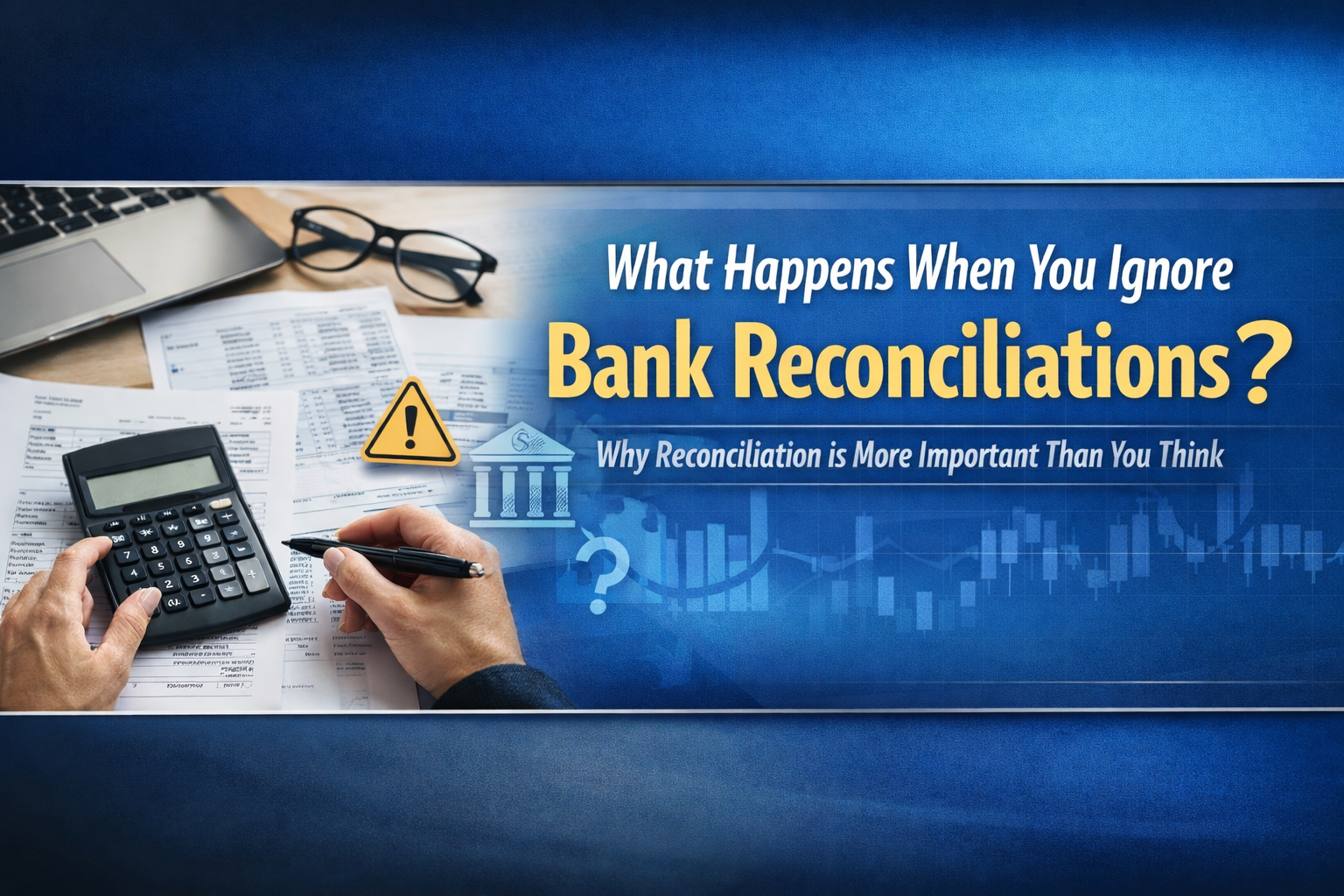
Why reconciliation is more important than you think
Many business owners believe that if their bank balance looks right, everything must be fine.
But in reality, the numbers in your accounting software and the numbers in your bank account can slowly drift apart if they are not checked regularly. This process of comparing the two is called bank reconciliation, and it is one of the most important steps in keeping accurate financial records.
When reconciliations are ignored, small errors can grow into serious financial problems.
Let’s look at what can happen when bank reconciliations are not done regularly.
What Is a Bank Reconciliation?
A bank reconciliation is the process of comparing the transactions in your accounting records with the transactions shown on your bank statement.
The goal is simple:
Make sure every deposit, withdrawal, fee, and payment recorded in your books matches what the bank reports.
Businesses typically perform reconciliations monthly, usually after receiving the bank statement.
Accurate reconciliations help confirm that your financial records reflect the true financial position of your business.
Source: Internal Revenue Service guidance on maintaining accurate books and records for businesses.
https://www.irs.gov/businesses/small-businesses-self-employed/recordkeeping
1. Errors Go Undetected
Mistakes happen more often than most business owners realize.
Common examples include:
• Duplicate transactions
• Missing expenses
• Incorrect payment amounts
• Deposits recorded twice
• Transactions posted to the wrong account
Without reconciliation, these errors may remain hidden for months.
Over time, the financial reports you rely on may no longer reflect reality.
2. Fraud and Unauthorized Transactions Can Be Missed
Bank reconciliation is one of the most effective ways to detect fraud.
If unauthorized charges appear on a bank statement and no one reviews it carefully, the activity can go unnoticed.
The Association of Certified Fraud Examiners (ACFE) reports that many fraud cases are discovered through internal controls like account reconciliation and financial review.
Source: https://www.acfe.com/report-to-the-nations
Regular reconciliations help identify suspicious transactions early.
3. Your Financial Reports Become Unreliable
Business owners rely on reports such as:
• Profit and Loss statements
• Balance sheets
• Cash flow reports
If your books are not reconciled, these reports may contain incorrect numbers.
That can lead to poor decisions such as:
• Overspending
• Incorrect pricing
• Hiring when cash flow cannot support it
• Missing warning signs of financial problems
Accurate reports start with accurate reconciliations.
4. Tax Filing Becomes More Difficult
When tax season arrives, accountants rely on accurate books.
If accounts have not been reconciled, the cleanup process can take hours or even days. Missing transactions or incorrect balances may delay tax preparation.
According to the IRS, businesses must maintain complete and accurate records to support income and expenses reported on tax returns.
Source: https://www.irs.gov/businesses/small-businesses-self-employed/recordkeeping
Regular reconciliation makes tax preparation much smoother.
5. Cash Flow Problems Become Harder to Spot
Cash flow is the lifeblood of any business.
Without reconciliation, it becomes difficult to answer important questions such as:
• How much cash is truly available?
• Are there outstanding payments that were never recorded?
• Did a customer payment fail to deposit correctly?
Small discrepancies can lead to incorrect assumptions about how much money the business actually has available.
How Often Should Bank Reconciliations Be Done?
Most businesses reconcile their bank accounts every month once the bank statement becomes available.
However, businesses with high transaction volume may benefit from weekly reconciliation to maintain tighter financial control.
The key is consistency.
Regular reconciliation keeps your records clean and your financial reports trustworthy.
A Simple Habit That Protects Your Business
Bank reconciliation may seem like a small task, but it plays a big role in financial accuracy.
When done consistently, it helps:
• Detect errors quickly
• Prevent fraud
• Maintain reliable financial reports
• Simplify tax preparation
• Provide a clear view of cash flow
Ignoring reconciliation, on the other hand, allows small issues to grow into larger financial problems.
Final Thoughts
Accurate bookkeeping is not just about recording transactions. It is about making sure those transactions match what actually happened in your bank account.
Bank reconciliation is one of the most important safeguards for your business finances.
When your books are reconciled regularly, you gain confidence that your financial information is reliable and ready for decision-making.
How Accredited Bookkeeping Can Support Your Business
At Accredited Bookkeeping, we understand the challenges small businesses face when it comes to managing finances. We’re here to help you streamline your bookkeeping processes, avoid unnecessary financial errors, and gain greater clarity about your financial health. Our services are designed to fit the specific needs of your business, giving you peace of mind while you focus on growth.
Contact us today for a free consultation and discover how we can make bookkeeping easier for you.
marianne@accreditedbookkeeping.com
Marianne Kirwan
352-626-0116
Schedule a meeting