Running a business is not only about making sales. It is also about having enough cash available to cover daily expenses, pay bills on time, and keep operations moving smoothly. That is where working capital comes in.
Many business owners focus heavily on profit, but even profitable businesses can struggle if they do not manage their working capital properly. Understanding this financial concept can help you avoid cash flow problems, make smarter decisions, and keep your business financially healthy.
What Is Working Capital?
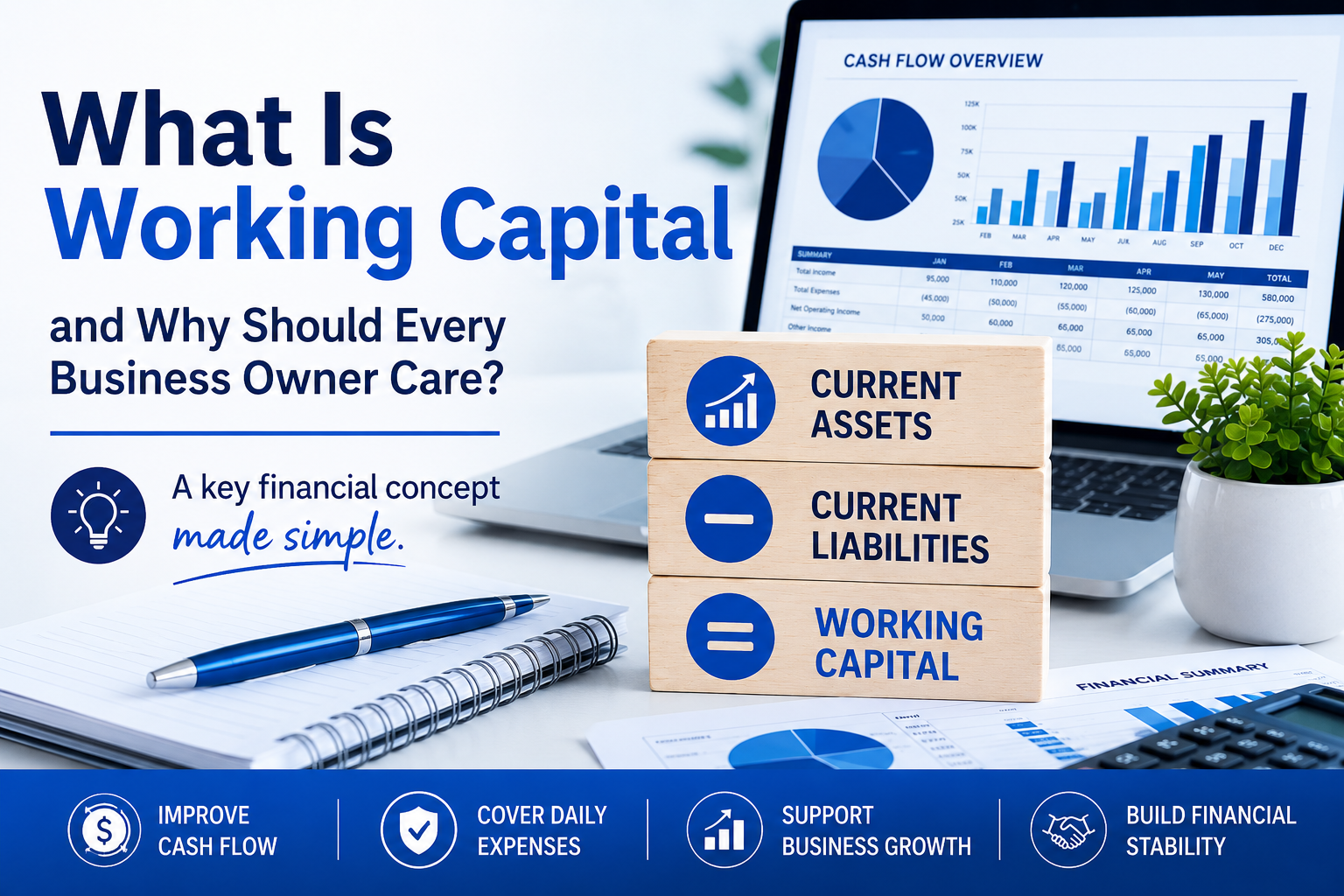
Working capital is the difference between your current assets and your current liabilities.
Current assets include:
- Cash
- Bank balances
- Accounts receivable (money customers owe you)
- Inventory
Current liabilities include:
- Bills and vendor payments
- Credit card balances
- Payroll obligations
- Short-term loans
- Taxes due within a year
The formula is simple:
Working Capital=Current Assets−Current Liabilities\text{Working Capital} = \text{Current Assets} – \text{Current Liabilities}Working Capital=Current Assets−Current Liabilities
If the result is positive, your business generally has enough short-term resources to cover its short-term obligations.
If the result is negative, it may be a sign of cash flow stress.
Simple Example of Working Capital
Let’s say your business has:
- $40,000 in cash and unpaid customer invoices
- $15,000 in inventory
- $30,000 in upcoming bills and short-term debt
Your working capital would look like this:
$55,000−$30,000=$25,000\$55{,}000 – \$30{,}000 = \$25{,}000$55,000−$30,000=$25,000
This means your business has $25,000 in positive working capital.
That extra cushion helps you operate comfortably without constantly worrying about immediate expenses.
Why Working Capital Matters
1. It Helps You Pay Everyday Expenses
Working capital keeps your business running day to day.
It helps cover:
- Rent
- Payroll
- Utilities
- Inventory purchases
- Software subscriptions
- Vendor payments
Without enough working capital, businesses may struggle to pay bills even if they are technically profitable on paper.
2. It Improves Cash Flow Stability
Strong working capital gives your business breathing room during slow months or unexpected situations.
For example:
- Seasonal sales drops
- Delayed customer payments
- Emergency repairs
- Sudden increases in costs
Businesses with healthy working capital are usually better prepared to handle financial ups and downs.
3. It Helps You Grow
Growth often requires upfront spending.
You may need to:
- Hire staff
- Buy inventory
- Invest in equipment
- Launch marketing campaigns
Good working capital allows you to take advantage of opportunities without immediately relying on loans or credit cards.
4. Lenders and Investors Look at It
Banks, lenders, and investors often review your working capital before approving funding.
Positive working capital may show that:
- Your business is financially stable
- You manage cash responsibly
- You can handle short-term obligations
Poor working capital can raise concerns about financial management and repayment ability.
Signs Your Working Capital May Need Attention
Some warning signs include:
- Struggling to make payroll
- Frequently using credit cards to cover expenses
- Paying vendors late
- Constantly waiting for customer payments
- Low bank balances despite strong sales
These issues may point to cash flow problems that need to be addressed early.
How to Improve Working Capital
Send Invoices Promptly
The faster you invoice customers, the faster you get paid.
Clear payment terms and regular follow-ups can help improve cash flow.
Monitor Expenses Carefully
Review subscriptions, recurring costs, and unnecessary spending regularly.
Small savings can make a big difference over time.
Manage Inventory Wisely
Too much inventory can tie up cash.
Keep inventory levels balanced so money is not sitting unused on shelves.
Negotiate Better Payment Terms
If possible, work with vendors to create payment schedules that support your cash flow.
Longer payment terms can provide more flexibility.
Review Financial Reports Monthly
Regularly reviewing your:
- Profit & Loss Statement
- Balance Sheet
- Cash Flow Statement
can help you spot problems early and make informed decisions.
Working Capital vs. Profit: What’s the Difference?
Many business owners confuse profit with cash availability.
A business can show a profit while still struggling financially if cash is tied up in unpaid invoices or inventory.
Profit measures earnings.
Working capital measures short-term financial health and liquidity.
Both are important, but working capital often has a more immediate impact on daily operations.
Final Thoughts
Working capital may sound like an accounting term, but it directly affects the everyday success of your business.
Understanding your working capital can help you:
- Stay ahead of bills
- Improve cash flow
- Reduce financial stress
- Prepare for growth
- Make smarter business decisions
The good news is that you do not need to be a financial expert to monitor it. With regular bookkeeping and accurate financial reports, you can better understand where your business stands and where improvements can be made.
How Accredited Bookkeeping Can Support Your Business
At Accredited Bookkeeping, we understand the challenges small businesses face when it comes to managing finances. We’re here to help you streamline your bookkeeping processes, avoid unnecessary financial errors, and gain greater clarity about your financial health. Our services are designed to fit the specific needs of your business, giving you peace of mind while you focus on growth.
Contact us today for a free consultation and discover how we can make bookkeeping easier for you.
marianne@accreditedbookkeeping.com
Marianne Kirwan
352-626-0116
Schedule a meeting