Getting the sale is only half the job. Your business still needs to collect the money.
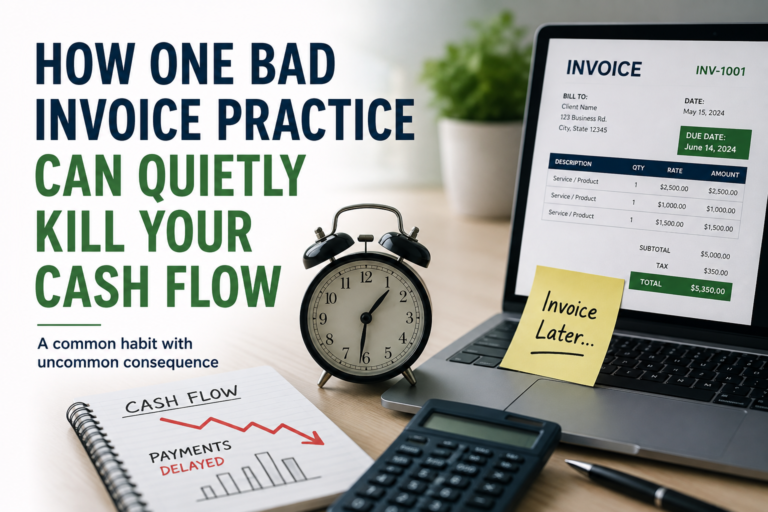
For many small business owners, unpaid and overdue invoices can create unnecessary cash flow problems. You may have completed the work, paid your employees or contractors, purchased materials, and covered other expenses—but the customer’s payment is still sitting in accounts receivable.
The good news is that invoicing does not have to be complicated. A few small changes to how you create, send, and follow up on invoices can make the payment process easier for customers and help your business collect money more efficiently.
Here are practical ways to invoice like a pro and build a better collection process.
1. Send the Invoice Promptly
One of the simplest invoicing improvements is also one of the easiest to overlook: send the invoice as soon as it is appropriate under your agreement with the customer.
If your agreement calls for invoicing when a project is completed, don’t wait several days to prepare the bill. The longer you wait to invoice, the later the collection process begins.
For example, imagine you finish a $2,500 project on Monday but do not send the invoice until the following Friday. You have already added several unnecessary days to your payment cycle.
Consider making invoicing part of your regular workflow. Depending on your business, that might mean invoicing immediately after completing a job or processing invoices at a set time each business day.
2. Make Every Invoice Easy to Understand
Customers should not have to figure out what they are being charged for.
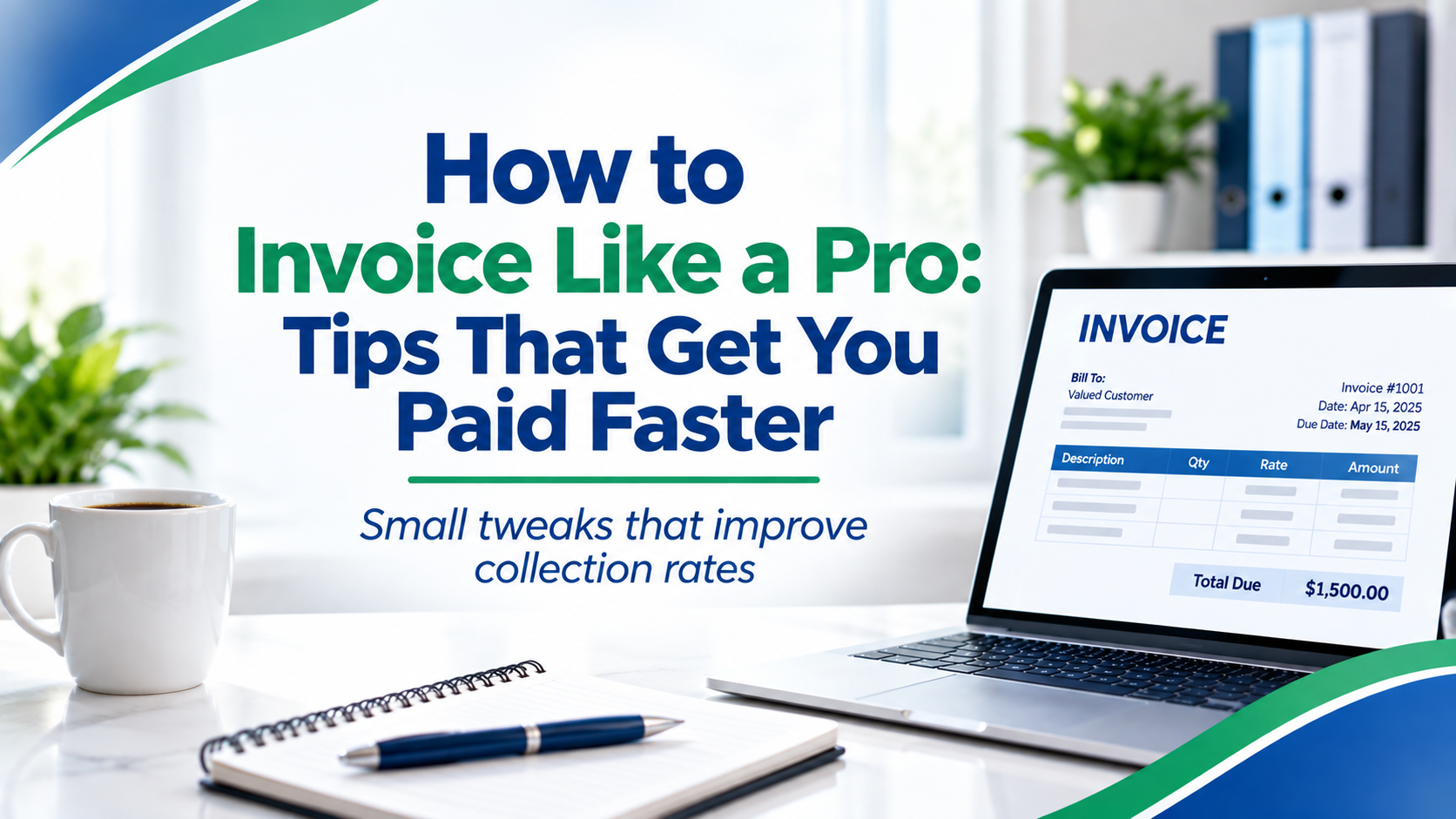
A professional invoice should clearly identify the transaction and provide enough information for the customer to understand what they owe.
Depending on your business and agreement, useful invoice information may include:
- Your business name and contact information
- Customer name and billing information
- Unique invoice number
- Invoice date
- Description of products or services
- Quantity, rate, or price when applicable
- Subtotal
- Applicable taxes or other agreed charges
- Total amount due
- Payment due date
- Accepted payment methods
- Payment instructions
- Purchase order or project number when required
Clear invoices can reduce back-and-forth questions that delay approval and payment.
Invoices are also important business records. The IRS specifically identifies invoices among the supporting documents businesses may use to substantiate transactions and gross receipts.
3. Use Specific Payment Terms
Avoid vague instructions such as:
“Please pay soon.”
Instead, tell customers exactly when payment is due.
For example:
Payment due: October 15, 2026
You can also use terms such as Net 15 or Net 30 when appropriate, but displaying the actual due date makes the deadline especially easy to understand.
Most importantly, payment terms should be established before the invoice becomes overdue. Ideally, customers should understand your payment requirements when they approve an estimate, proposal, engagement letter, or service agreement.
That prevents the invoice from being the first time they learn about your expectations.
4. Make It Easy for Customers to Pay
Every unnecessary step between receiving an invoice and submitting payment creates friction.
Think about your customer’s experience.
Can they immediately see how much they owe?
Can they quickly determine when the payment is due?
Are the payment instructions obvious?
Can they use a convenient payment method?
Depending on your business, you might accept ACH transfers, credit or debit cards, checks, or other electronic payment options. Consider transaction fees, processing time, security, bookkeeping integration, and customer preferences when deciding which methods to offer.
Convenience matters. A customer who can quickly review an invoice and make a payment has fewer reasons to put it aside for later.
5. Use Unique Invoice Numbers
Every invoice should have a unique identifier.
A simple numbering system might look like:
INV-1001
INV-1002
INV-1003
Invoice numbers make it easier to track payments, research questions, communicate with customers, and maintain organized accounting records.
For example, instead of emailing:
“Did you pay the invoice I sent last month?”
you can ask:
“Could you confirm the payment status of Invoice INV-1047, due September 10?”
That is much easier for both businesses to investigate.
6. Double-Check the Invoice Before Sending It
A small invoice mistake can become a big payment delay.
Before sending an invoice, check the customer’s billing details, description of work, pricing, applicable taxes, payment terms, purchase order information, and total amount.
This is especially important when working with larger customers. Their accounts payable department may require specific information before approving an invoice.
If a required purchase order number is missing, for example, the invoice could be rejected and sent back for correction.
A quick review before sending can prevent days or weeks of unnecessary delay.
7. Create a Consistent Follow-Up System
Following up on unpaid invoices should not depend on whether you happen to remember them.
Create a standard accounts receivable process.
For example, your business might send a friendly reminder shortly before the due date, another notice when an invoice becomes overdue, and additional follow-ups at predetermined intervals.
The exact schedule should fit your business and customer relationships.
Automated reminders can also be useful. Many accounting and invoicing platforms allow businesses to automatically notify customers about upcoming or overdue invoices.
Automation reduces administrative work and makes collections more consistent.
8. Keep the First Reminder Friendly
An overdue invoice does not automatically mean a customer is refusing to pay.
The invoice may have gone to a spam folder. A customer may have forgotten. The accounting department may need additional information. A payment may even be processing.
Start professionally.
A simple message can state that the invoice appears to be outstanding, identify the invoice number and amount, and ask the customer to confirm the payment status.
The goal is to solve the problem—not create unnecessary tension with a good customer.
9. Be Careful With Late Fees and Interest
Late-payment charges may encourage timely payment, but businesses should not simply add arbitrary penalties to overdue invoices.
Any late fee or interest policy should be clearly established in advance and comply with applicable contracts and laws.
This is particularly important for Florida businesses. Florida law contains rules governing interest and usury, including limits that can apply to certain obligations. For example, Florida Statutes §687.03 generally identifies interest above 18% per year as unlawful in transactions within the statute, subject to its provisions and exceptions.
Because the legality of a particular late fee or finance charge depends on the transaction and agreement, businesses should have their payment terms reviewed by a qualified Florida attorney when necessary rather than assuming a particular fee is permissible.
10. Review Accounts Receivable Regularly
Professional invoicing does not end when you click “Send.”
Review your accounts receivable regularly so you know:
- Which invoices are outstanding
- Which invoices are overdue
- How much each customer owes
- How long balances have been outstanding
- Which customers consistently pay late
An accounts receivable aging report can be particularly helpful. It typically organizes unpaid invoices according to how long they have been outstanding.
For example, balances may be grouped into categories such as current, 1–30 days overdue, 31–60 days, 61–90 days, and more than 90 days.
This gives you a much clearer picture than simply looking at your bank balance.
Small Tweaks Can Improve Your Collection Process
Consider two businesses that each invoice $10,000 during the month.
Business A sends invoices several days late, uses inconsistent payment terms, manually tracks unpaid bills, and follows up only when cash gets tight.
Business B invoices promptly, includes clear due dates, provides straightforward payment instructions, uses automatic reminders, and reviews accounts receivable every week.
Both businesses earned the same amount.
But Business B has built a stronger process for turning those sales into cash.
That distinction matters. Revenue on your books does not necessarily mean money is already available in your bank account.
Keep Invoices Connected to Your Bookkeeping
Invoices should not exist separately from the rest of your financial records.
Your bookkeeping system should allow you to determine what has been invoiced, what has been paid, and what remains outstanding. Customer payments also need to be recorded correctly so your books do not continue showing an invoice as unpaid after the money has been received.
The IRS emphasizes the importance of maintaining records that clearly show business income and expenses and identifies invoices as supporting business documents. Good records also help businesses monitor performance and prepare accurate financial statements and tax returns.
Electronic bookkeeping records are acceptable, but electronic systems are subject to the same basic recordkeeping requirements as hard-copy records and should provide complete and accurate information accessible when needed.
Practical Invoicing Checklist
Before sending your next invoice, ask:
- Is the customer information correct?
- Does the invoice have a unique number?
- Is the work or product clearly described?
- Is the amount correct?
- Is the due date obvious?
- Are payment instructions easy to follow?
- Have any applicable payment terms been clearly communicated?
- Is the invoice recorded in the bookkeeping system?
- Is there a process for following up if payment is late?
Turning this into a standard checklist can prevent small administrative mistakes from becoming collection problems.
Conclusion
Getting paid faster is not always about becoming more aggressive with customers. Often, it is about creating a clearer and more consistent process.
Send invoices promptly. Make them easy to understand. Establish payment terms in advance. Make payment convenient. Follow up consistently. And keep your accounts receivable records current.
Those small improvements can help reduce confusion, make collections easier to manage, and give you a more accurate picture of your company’s cash flow.
How Accredited Bookkeeping Can Support Your Business
At Accredited Bookkeeping, we understand the challenges small businesses face when it comes to managing finances. We’re here to help you streamline your bookkeeping processes, avoid unnecessary financial errors, and gain greater clarity about your financial health. Our services are designed to fit the specific needs of your business, giving you peace of mind while you focus on growth.
Contact us today for a free consultation and discover how we can make bookkeeping easier for you.
marianne@accreditedbookkeeping.com
Marianne Kirwan
352-626-0116