The Real Cost of Procrastinating Your Books
Running a business means wearing a lot of hats. You’re serving customers, managing employees, handling marketing, and trying to grow your company. With so much going on, bookkeeping often gets pushed to the bottom of the to-do list.
Many business owners tell themselves, “I’ll deal with it later.”
At first, it doesn’t seem like a big deal. A few uncategorized transactions. A stack of receipts. A couple of months without reconciling the bank account.
But those small delays can quietly turn into expensive problems.
The truth is, procrastinating your bookkeeping doesn’t just create paperwork—it can cost you money, opportunities, and peace of mind.
Why Business Owners Delay Their Books
Most owners don’t ignore bookkeeping because they’re careless.
They delay it because they’re busy running the business.
Common reasons include:
- “I’ll catch up next month.”
- “Tax season is still far away.”
- “I know roughly how much money I have.”
- “My bank balance tells me everything I need to know.”
Unfortunately, these assumptions can become costly over time.
Small Problems Grow Into Big Ones
Bookkeeping is much like maintaining your vehicle.
Skip one oil change, and you may not notice anything.
Skip several, and you’re looking at a major repair bill.
The same principle applies to your financial records.
A missed transaction today becomes dozens next month.
Before long, you’re trying to sort through months—or even a year’s worth—of bank statements, receipts, invoices, and payroll records.
The longer you wait, the harder and more expensive the cleanup becomes.
You Lose Visibility Into Your Business
One of the biggest hidden costs of delayed bookkeeping is losing sight of your financial health.
Without current books, it’s difficult to answer important questions like:
- Am I actually making a profit?
- Which services are the most profitable?
- Can I afford to hire another employee?
- Is my cash flow improving or getting worse?
Instead of making informed decisions, many owners end up guessing.
Accurate bookkeeping gives you timely financial statements that help you monitor business performance, identify income and expenses, and prepare reliable financial reports. The IRS also emphasizes that good records support tax reporting and business management.
Cash Flow Problems Often Go Unnoticed
Many profitable businesses struggle with cash flow.
Without updated books, you may not realize:
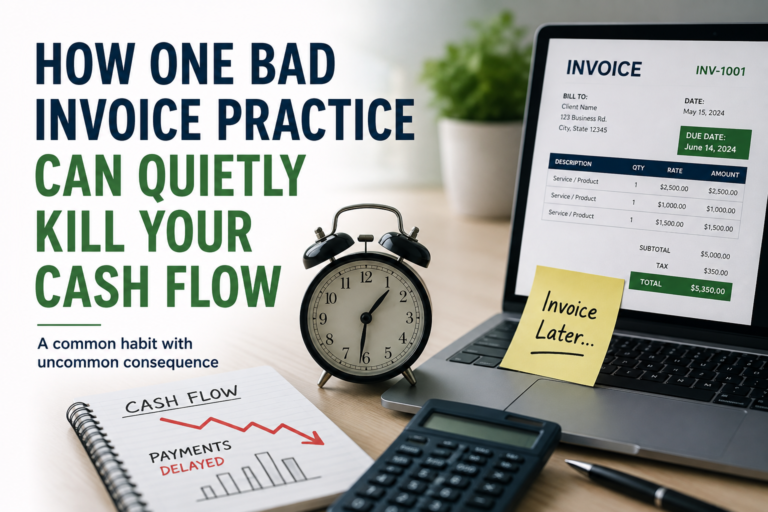
- Customers are paying late.
- Expenses are increasing faster than revenue.
- Certain jobs or products are losing money.
- Upcoming bills will create a cash shortage.
By the time these issues become obvious, they’re often much harder to fix.
Monthly bookkeeping helps identify trends before they become emergencies.
Missed Tax Deductions Can Cost You Money
When bookkeeping falls behind, receipts disappear.
Transactions become harder to identify.
Business expenses get forgotten.
That can mean leaving legitimate tax deductions on the table simply because you no longer have the documentation needed to support them.
The IRS requires businesses to maintain records that clearly show income and expenses and to keep supporting documentation for deductions.
Tax Season Becomes Stressful
Instead of handing your CPA organized financial records, you’re scrambling to:
- Download bank statements
- Find missing receipts
- Categorize hundreds of transactions
- Explain unusual payments
- Reconstruct months of financial activity
This often leads to:
- Higher accounting fees
- Longer turnaround times
- More stress
- Increased risk of errors
Many accountants charge significantly more for cleanup work than for maintaining books consistently throughout the year.
Poor Records Can Delay Financing
If you ever need:
- A business loan
- Equipment financing
- An SBA loan
- New investors
- A line of credit
One of the first things lenders usually request is current financial statements.
If your books aren’t up to date, financing may be delayed—or even denied until your records are complete.
Keeping your books current means you’re ready when opportunities arise.
Compliance Issues Become More Likely
Late bookkeeping can also increase the risk of:
- Payroll mistakes
- Sales tax reporting errors
- Missed filing deadlines
- Inaccurate financial reporting
If tax returns are filed late or with inaccurate information, businesses may face penalties and interest depending on the circumstances.
The Emotional Cost Is Real
Financial uncertainty creates stress.
When you don’t know your numbers, it’s common to worry about:
- Whether there’s enough money in the bank
- How much you’ll owe in taxes
- Whether you can make payroll
- If the business is truly profitable
Clean, current books replace uncertainty with confidence.
Instead of wondering where your business stands, you’ll know.
A Real-World Example
Imagine a Florida landscaping company that waits eight months to update its bookkeeping.
During the cleanup, the owner discovers:
- Several unpaid customer invoices
- Duplicate vendor payments
- Missing deductible expenses
- Incorrect payroll entries
- A cash flow issue that had been building for months
Had the books been reviewed monthly, each of these issues could have been identified and corrected much earlier.
Instead of paying for extensive cleanup and dealing with avoidable surprises, the owner could have focused on growing the business.
How to Break the “I’ll Do It Later” Habit
You don’t have to spend hours every week managing your books.
A few consistent habits make a big difference:
- Reconcile bank accounts monthly.
- Keep personal and business expenses separate.
- Save receipts digitally.
- Review your financial reports every month.
- Work with a professional bookkeeper before small issues become expensive ones.
Consistency is far less costly than catching up.
Final Thoughts
The phrase “I’ll deal with it later” may feel harmless today, but it often becomes one of the most expensive habits in business.
Delayed bookkeeping can lead to missed deductions, cash flow problems, higher accounting fees, financing delays, compliance issues, and unnecessary stress.
Your books are more than a tax requirement—they’re a tool for making informed decisions and building a stronger business.
Keeping them current helps you stay in control, spot problems early, and focus on what matters most: growing your business with confidence.
How Accredited Bookkeeping Can Support Your Business
At Accredited Bookkeeping, we understand the challenges small businesses face when it comes to managing finances. We’re here to help you streamline your bookkeeping processes, avoid unnecessary financial errors, and gain greater clarity about your financial health. Our services are designed to fit the specific needs of your business, giving you peace of mind while you focus on growth.
Contact us today for a free consultation and discover how we can make bookkeeping easier for you.
marianne@accreditedbookkeeping.com
Marianne Kirwan
352-626-0116