Tax season does not have to be stressful. The key to a smooth and accurate tax filing is preparation. When your bookkeeper has the right documents early, it saves time, reduces errors, and helps you avoid last-minute surprises.
If you are a business owner, gathering these documents before tax filing begins will make the entire process easier and more cost-effective.
Why Preparing Documents Early Matters
Providing documents late can delay your tax filing, increase fees, and raise the risk of mistakes. Early preparation allows your bookkeeper to:
- Reconcile accounts correctly
- Identify missing or incorrect transactions
- Spot deductions you may have missed
- Ensure compliance with IRS rules
In short, organized records lead to better financial outcomes.
Core Business Information Your Bookkeeper Needs
Before tax work starts, your bookkeeper will need basic business details to ensure everything is filed correctly.
These include:
- Legal business name and address
- Employer Identification Number (EIN) or Social Security Number for sole proprietors
- Business structure (LLC, S-Corp, C-Corp, Partnership, or Sole Proprietor)
- State registration details if applicable
If any of this information has changed during the year, it is important to notify your bookkeeper.
Income Documents to Provide
Your bookkeeper needs complete records of all income earned during the year.
Make sure to gather:
- Bank statements for all business accounts
- Payment processor reports (Stripe, PayPal, Square, Zelle, etc.)
- Sales reports from platforms like Shopify, Etsy, or Amazon
- 1099-NEC or 1099-K forms received
- Cash sales records, if applicable
All income must be reported, even if no tax form was issued.
Expense Records and Receipts
Accurate expense tracking is essential for maximizing deductions.
Provide:
- Credit card statements used for business
- Receipts for supplies, software, subscriptions, and services
- Rent or lease agreements
- Utility bills if partially business-related
- Marketing and advertising expenses
- Professional fees (legal, accounting, consulting)
Digital receipts are acceptable and often preferred.
Payroll and Contractor Documents
If you paid employees or contractors, additional documentation is required.
Your bookkeeper will need:
- Payroll reports for the full year
- Form W-2 and W-3 copies
- Contractor payment records
- Form 1099-NEC filings and confirmations
- Payroll tax payment records
Accurate payroll records help avoid penalties and filing issues.
Asset and Equipment Information
For depreciation and deductions, asset details are important.
Provide:
- Purchase receipts for equipment, furniture, and vehicles
- Date of purchase and cost
- Financing or lease agreements
- Asset disposal records if items were sold or discarded
These documents help determine depreciation and capital expenses correctly.
Loan and Liability Documents
Outstanding debts affect your financial reporting.
Include:
- Business loan statements
- Credit line statements
- Interest paid summaries
- SBA loan documentation, if applicable
Interest expenses may be deductible when properly documented.
Prior-Year Tax Returns
Your previous tax filings give your bookkeeper valuable context.
Always provide:
- Last year’s federal and state tax returns
- Any IRS notices or correspondence
- Prior depreciation schedules
This helps ensure continuity and accuracy year over year.
Owner-Specific Documents
Depending on your business type, additional documents may be required.
These may include:
- Owner contributions and distributions
- Health insurance payments (for S-Corp owners)
- Retirement contributions
- Home office expense details
Your bookkeeper will confirm what applies to your situation.
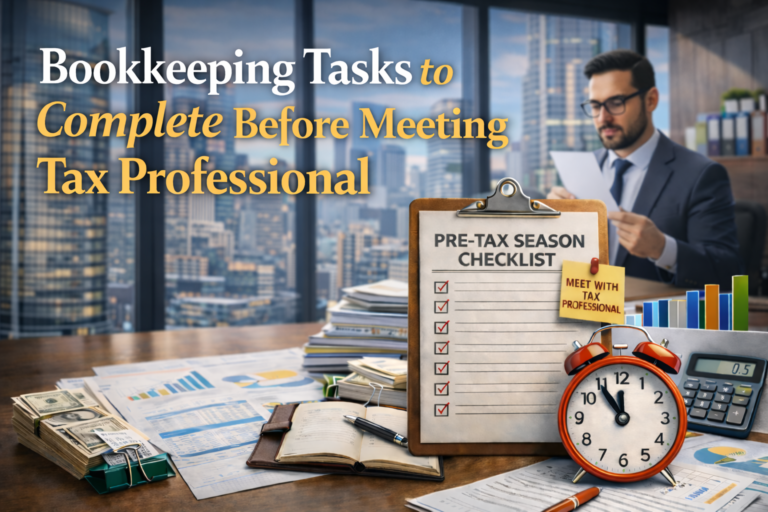
Final Checklist Before Submitting Documents
Before sending everything over, double-check that:
- All months are included
- Accounts are not missing statements
- Personal and business expenses are clearly separated
- Documents are labeled and organized
This step alone can save hours of cleanup work.
How Accredited Bookkeeping Can Support Your Business
At Accredited Bookkeeping, we understand the challenges small businesses face when it comes to managing finances. We’re here to help you streamline your bookkeeping processes, avoid unnecessary financial errors, and gain greater clarity about your financial health. Our services are designed to fit the specific needs of your business, giving you peace of mind while you focus on growth.
Contact us today for a free consultation and discover how we can make bookkeeping easier for you.
marianne@accreditedbookkeeping.com
Marianne Kirwan
352-626-0116
Schedule a meeting