Signs It’s Time to Move Beyond Cash-Based Bookkeeping
As a small business owner, your bookkeeping system should provide a clear picture of your company’s financial health. Many startups and small businesses begin with cash-based accounting because it is simple and easy to manage. However, as a business grows, cash accounting may no longer provide the accurate financial insights needed for decision-making.
At some point, switching to accrual accounting becomes necessary. The challenge is knowing when that time has arrived.
In this article, we’ll explain the differences between cash and accrual accounting, the signs that indicate it’s time to switch, and how the change can help your business grow.
What Is Cash-Based Accounting?
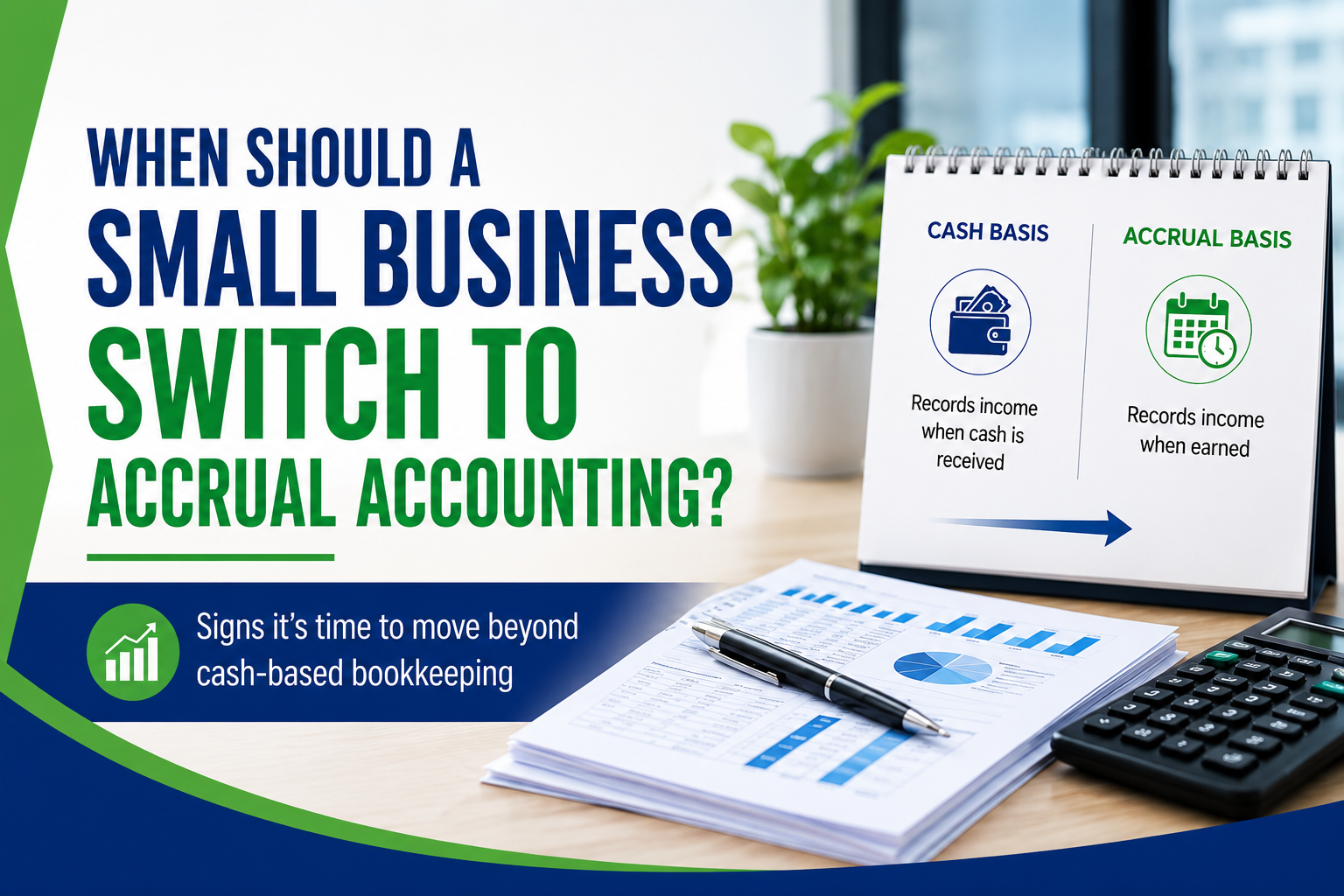
Cash-based accounting records income when money is received and expenses when money is paid.
Example
A customer receives an invoice in December but pays in January.
- Under cash accounting, the income is recorded in January when payment is received.
- December shows no revenue from that sale.
Many small businesses prefer cash accounting because it is straightforward and closely matches bank account activity.
What Is Accrual Accounting?
Accrual accounting records income when it is earned and expenses when they are incurred, regardless of when cash changes hands.
Example
Using the same invoice example:
- The sale is recorded in December when the work was completed.
- Payment received in January does not affect when the revenue is recognized.
This method provides a more accurate picture of business performance during a specific period.
Why Businesses Start with Cash Accounting
Cash accounting is often a good fit for:
- New businesses
- Sole proprietors
- Freelancers
- Small service-based companies
- Businesses with limited transactions
Benefits include:
- Simplicity
- Lower bookkeeping costs
- Easier cash flow tracking
- Less administrative work
However, as operations become more complex, cash accounting can create blind spots.
Sign #1: You Carry Significant Accounts Receivable
If customers regularly pay after receiving invoices, your business may benefit from accrual accounting.
Why It Matters
Cash accounting only shows revenue when payment arrives.
This can make monthly income appear inconsistent even when sales are strong.
Example
A consulting firm completes $30,000 worth of work in June but receives payment in July.
Under cash accounting:
- June appears less profitable.
- July appears more profitable.
Accrual accounting reflects the revenue in June when it was earned, providing a clearer picture of performance.
Sign #2: You Have Inventory
Inventory is one of the biggest indicators that a business may need accrual accounting.
Example
A retail business purchases $20,000 in inventory in January but sells it throughout the year.
Cash accounting records the entire purchase immediately as an expense.
This can distort profitability because the inventory may generate revenue months later.
Accrual accounting matches inventory costs to the period when products are sold, producing more accurate financial statements.
Sign #3: Your Revenue Is Growing Rapidly
As your business expands, financial decisions become more important.
You may need to answer questions such as:
- Which services are most profitable?
- Which months generate the highest margins?
- Are sales increasing or decreasing?
Cash accounting often fails to provide these insights because timing differences can distort financial reports.
Accrual accounting offers a more reliable view of business performance and trends.
Sign #4: You Need Financing or Investors
Banks, lenders, and investors typically prefer accrual-based financial statements.
Why?
Because accrual accounting provides a more complete picture of:
- Revenue
- Expenses
- Assets
- Liabilities
- Overall profitability
When seeking:
- Business loans
- Lines of credit
- Equipment financing
- Investor funding
Accrual-based reports often improve credibility and make financial analysis easier.
Sign #5: Your Financial Statements Seem Inconsistent
Do your profits fluctuate dramatically from month to month even though business activity remains steady?
This is a common warning sign.
Example
A company receives several large payments in one month and very few the next month.
Cash accounting may show:
- One highly profitable month
- One seemingly weak month
Accrual accounting smooths these timing differences and provides more meaningful financial reporting.
Sign #6: You Need Better Budgeting and Forecasting
Growing businesses rely on accurate forecasts to make decisions.
Examples include:
- Hiring employees
- Expanding locations
- Purchasing equipment
- Managing operating expenses
Accrual accounting helps business owners understand future obligations and expected income, making forecasting more reliable.
Sign #7: You Have Ongoing Contracts or Projects
Businesses that work on long-term projects often struggle with cash accounting.
Examples include:
- Construction companies
- Marketing agencies
- Consulting firms
- IT service providers
Accrual accounting allows revenue and expenses to be recognized as work progresses, providing more accurate project profitability analysis.
Sign #8: Your Business Has More Complex Expenses
As businesses grow, they often encounter:
- Prepaid expenses
- Vendor credit terms
- Loan obligations
- Payroll liabilities
- Subscription services
Cash accounting may not accurately reflect these obligations.
Accrual accounting records expenses when incurred, helping management understand true operating costs.
Benefits of Switching to Accrual Accounting
Making the transition can provide several advantages.
More Accurate Financial Reporting
Income and expenses are matched to the periods they relate to.
Better Decision-Making
Business owners gain a clearer understanding of profitability and trends.
Improved Financial Planning
Forecasting and budgeting become more reliable.
Increased Credibility
Financial statements are often more useful to lenders, investors, and business partners.
Stronger Growth Management
Accrual accounting helps businesses monitor performance as operations become more complex.
Challenges of Switching to Accrual Accounting
While beneficial, accrual accounting requires more detailed bookkeeping.
Business owners may need to track:
- Accounts receivable
- Accounts payable
- Inventory
- Prepaid expenses
- Accrued liabilities
The process can be more time-consuming without proper systems and professional support.
Fortunately, modern bookkeeping software and experienced bookkeeping professionals can make the transition much smoother.
Tips for a Successful Transition
If you’re considering switching to accrual accounting:
Review Your Business Growth
Determine whether your current bookkeeping system still provides meaningful financial insights.
Clean Up Your Books
Ensure invoices, expenses, and account balances are accurate before converting.
Use Reliable Accounting Software
Most modern accounting platforms support both cash and accrual reporting.
Work with a Professional Bookkeeper
An experienced bookkeeping professional can help ensure the transition is accurate and compliant.
Monitor Financial Reports Regularly
Review profit and loss statements, balance sheets, and cash flow reports to understand the impact of the change.
Conclusion
Cash-based accounting works well for many small businesses in the early stages. However, as a company grows, adds inventory, extends customer payment terms, seeks financing, or requires more accurate financial reporting, accrual accounting often becomes the better choice.
If your financial reports no longer provide the clarity needed to make informed decisions, it may be time to move beyond cash-based bookkeeping. Switching to accrual accounting can provide a more complete picture of your business’s financial health and help support long-term growth.
For many growing businesses, the move to accrual accounting isn’t just an accounting change—it’s an important step toward smarter financial management.
How Accredited Bookkeeping Can Support Your Business
At Accredited Bookkeeping, we understand the challenges small businesses face when it comes to managing finances. We’re here to help you streamline your bookkeeping processes, avoid unnecessary financial errors, and gain greater clarity about your financial health. Our services are designed to fit the specific needs of your business, giving you peace of mind while you focus on growth.
Contact us today for a free consultation and discover how we can make bookkeeping easier for you.
 marianne@accreditedbookkeeping.com
Marianne Kirwan
 352-626-0116
 Schedule a meeting